
The Pore Myth: Why You Can’t Open, Close, or Shrink Your Pores
Walk down any skincare aisle or scroll through social media for five minutes, and you’ll be promised products that "shrink," "tighten," "erase," or "close" your pores. From $80 "pore-refining" toners to facial steamers and suction gadgets, the beauty industry makes billions selling solutions for a biological impossibility.
Here is the unvarnished truth: Pores are not doors. They do not have muscles. You cannot open them, you cannot close them, and you cannot permanently shrink them.
Let’s separate basic human anatomy from cosmetic marketing hype—and look at what independent, non-industry-funded science actually says works.
What Are Pores, Anyway?
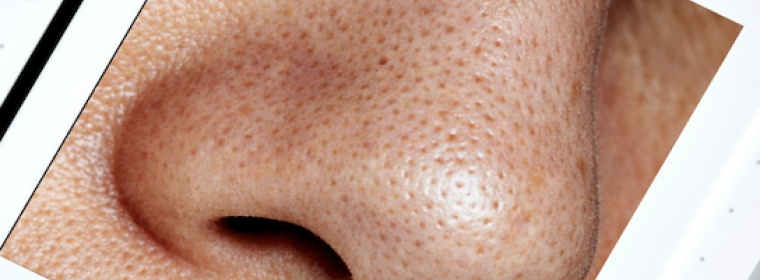
Under a microscope, a facial pore is simply the surface opening of a pilosebaceous unit—a tiny tunnel housing a hair follicle and an oil (sebaceous) gland. Their job is to let sweat and sebum (your skin’s natural oil) reach the surface to keep your skin lubricated and protected.
Because pore openings contain zero smooth muscle fibers, they cannot physically expand or contract on command. No cream, toner, or temperature change can make a pore wall snap shut.
The "Hot Water Opens, Cold Water Closes" Fairy Tale
One of the most stubborn myths in skincare is that steaming your face or washing with hot water "opens" your pores to let cleansers in, while splashing with cold water "closes" them afterward to lock moisture in.
There isn’t a single independent clinical trial backing this up—because it defies basic physiology:
- What heat actually does: Warm water and steam soften hardened sebum and dead skin cells trapped inside the pore, making that debris easier to wash away. It doesn't open the pore; it just loosens the plug. (And scalding hot water? That just strips your skin barrier and triggers inflammation.)
- What cold actually does: Cold water temporarily constricts tiny blood vessels near the skin's surface, which can reduce puffiness and make skin look momentarily tighter. Ten minutes later, when your skin warms back up to body temperature, your pores look identical.
Why Some Pores Look Bigger Than Others
If you can’t shrink your pores, why are some barely visible while others look like craters? Three factors dictate pore appearance:
- Genetics: Your baseline pore size is written in your DNA, right alongside your height and eye color.
- Oil Production: Pores on the nose, chin, and forehead (the T-zone) naturally look larger because those areas pack more active oil glands. When excess oil mixes with dead skin cells, it stretches the pore opening outward.
- Sun Damage and Aging: Cumulative UV exposure breaks down dermal collagen and elastin—the structural scaffolding that holds your skin firm. When that surrounding support weakens, the pore walls sag and look wider.
What Actually Works (Backed by Independent Science)
Most "pore-minimizing" products rely on flashy before-and-after photos or tiny studies funded by the very companies selling the bottle. When you strip away industry-sponsored hype and look at independent, peer-reviewed clinical trials, you don't need a 10-step routine to make pores look cleaner and less noticeable:
- Protect your collagen with daily sunscreen: In the landmark Nambour Skin Cancer Prevention Trial—a 4.5-year randomized controlled trial funded by Australia’s National Health and Medical Research Council—adults who applied broad-spectrum sunscreen daily showed 24% less detectable skin aging than those who used it only occasionally. Preserving your dermal collagen keeps the skin around your pores firm so they don't sag and widen over time.
- Use a proven retinoid: Independent, double-blind, vehicle-controlled trials conducted at the University of Michigan (published in JAMA) demonstrated that prescription tretinoin stimulates new collagen formation and normalizes skin cell turnover. Over-the-counter adapalene (an FDA-approved retinoid) also helps keep follicles clear of the dead-cell buildup that stretches pores out. (Note: Cosmetic "retinol" creams rely far more on manufacturer-funded testing and work much more slowly, if at all.)
- Keep oil moving with salicylic acid: Unlike water-soluble acids, salicylic acid (a beta hydroxy acid) is oil-soluble. Clinical dermatology studies confirm it penetrates into the oily pore lining to dissolve compacted sebum and dead skin cells. When a pore isn't stuffed with debris, it naturally looks smaller.
- Step away from the magnifying mirror: Nobody inspects your face from two inches away under harsh bathroom lighting—except you.
The Bottom Line
Stop throwing money at "pore-erasing" potions, ice rollers, and suction vacuums. You cannot change your genetics, and you cannot outsmart human anatomy. Stick to gentle cleansing, a proven retinoid or salicylic acid if needed, and daily broad-spectrum sunscreen—and let your pores do the job they were built to do.